<?xml version="1.0" encoding="utf-8"?>
<feed xmlns="http://www.w3.org/2005/Atom" xml:lang="en">

    <title type="text">Culture Making Articles items tagged gardens and cities</title>
    <subtitle type="text">Culture Making Articles:Writing on Christianity and culture from Andy Crouch</subtitle>
    <link rel="alternate" type="text/html" href="http://culture-makers.com/" />
    <link rel="self" type="application/atom+xml" href="https://culture-making.com/tag/atom" />
    <updated>2025-01-03T22:54:05Z</updated>
    <rights>Copyright (c) 2025, Andy Crouch</rights>
    <generator uri="http://www.pmachine.com/" version="7.5.15">ExpressionEngine</generator>
    <id>tag:culture-makers.com,2025:01:02</id>

    <entry>
      <title>Not only God&#8217;s handiwork</title>
      <link rel="alternate" type="text/html" href="https://culture-making.com/post/not_only_gods_handiwork" />
      <id>tag:culture-makers.com,2025:author/1.599</id>
      <published>2025-01-02T22:53:00Z</published>
      <updated>2025-01-03T22:54:05Z</updated>
      <author>
            <name>Andy Crouch</name>
            <email>andy@culture-making.com</email>
            
      </author>

      <content type="html"><![CDATA[


		<p>The Holy City, by definition, is already a cultural artifact, the work of a master Architect and Artist. The citizens themselves are the redeemed people of the Lamb, drawn from “every tribe, language, people, and nation” (Rev. 5:9). But God’s handiwork, artifacts and people alike, are <i>not</i> all that is found in the city. Also in the city are “the glory and the honor of the nations”&#8212;brought into the city by none other than &#8220;the kings of the earth.&#8221;</p><br />
		<p><small>	&mdash;<i>Culture Making</i>, p.166</small></p>


      ]]></content>
    </entry>    <entry>
      <title>Not a garden, but a city</title>
      <link rel="alternate" type="text/html" href="https://culture-making.com/post/not_a_garden_but_a_city" />
      <id>tag:culture-makers.com,2025:author/1.532</id>
      <published>2025-01-02T22:53:00Z</published>
      <updated>2025-01-03T22:54:05Z</updated>
      <author>
            <name>Andy Crouch</name>
            <email>andy@culture-making.com</email>
            
      </author>

      <content type="html"><![CDATA[


		<p>Revelation 21:2 is the last thing a careful reader of Genesis 1–11 would expect: in the remade world, the center of God’s creative delight is not a Garden, but a City. And a city is, by definition, a place where culture reaches critical mass—a place where culture eclipses the natural world as the most important feature we must make something of. Somehow the city, the embodiment of concentrated human culture, has been transformed from the site of sin and judgment to the ultimate expression of grace, a gift coming “down out of heaven from God.”</p>

<br />
		<p><small>	&mdash;<i>Culture Making</i>, p.122
</small></p>


      ]]></content>
    </entry>    <entry>
      <title>Not just for &#8220;creatives&#8221;</title>
      <link rel="alternate" type="text/html" href="https://culture-making.com/post/not_just_for_creatives" />
      <id>tag:culture-makers.com,2025:author/1.529</id>
      <published>2025-01-02T22:53:00Z</published>
      <updated>2025-01-03T22:54:05Z</updated>
      <author>
            <name>Andy Crouch</name>
            <email>andy@culture-making.com</email>
            
      </author>

      <content type="html"><![CDATA[


		<p>Creativity is not something just for “creatives”—we all have given being to some sentence the world had never heard before, and may never hear again. In all likelihood, unless we are stuck in a dull job and have dull friends, we have done so this very day. Where did that sentence come from? It was potentially present in the grammar and vocabulary of our language; it may well bear a resemblance to words we and others have thought and said before; but it did not exist before, and it does now. Had we not spoken it, it would have gone unsaid.</p><br />
		<p><small>	&mdash;<i>Culture Making</i>, p.104
</small></p>


      ]]></content>
    </entry>    <entry>
      <title>Tree gender and pollen counts</title>
      <link rel="alternate" type="text/html" href="https://culture-making.com/post/tree_gender_and_pollen_counts" />
      <id>tag:culture-makers.com,2025:author/1.1866</id>
      <published>2025-01-02T22:53:00Z</published>
      <updated>2025-01-03T22:54:05Z</updated>
      <author>
            <name>Andy Crouch</name>
            <email>andy@culture-making.com</email>
            
      </author>

      <content type="html"><![CDATA[


					<b>Nate: </b><em>?Are seasonal allergies getting worse because we're planting too many male trees? The "holes" in the pollen map are also rather interesting. I'm assuming they reflect a lack of data rather than a lack of pollen.?</em><br />
		
		<p align="center"><img src="http://culture-making.com/media/4508088802_a5888144d1_o_420.jpg"></p><p>One of the most memorable posts on <i>Pruned</i>, I think, was written way back in September 2005, when Alex took a look at what he called &#8220;<a href="http://pruned.blogspot.com/2005/09/litter-free-landscapes-and-politics-of.html" target="_blank">litter-free landscapes and the politics of pollen</a>.&#8221; He quoted horticulturalist <a href="http://www.allergyfree-gardening.com/" target="_blank">Thomas Leo Ogren</a> at length:</p><blockquote><p>In our urban landscapes we now have the most manipulated kind of city forest ever seen. In the past twenty years landscapers have grown inordinately fond of using male trees. In dioecious species (separate-sexed) there are separate male trees and separate female ones. Female trees and shrubs do not produce any pollen, ever, but they do produce messy seeds, fruits, old flowers, and seedpods. Landscapers and city arborists consider this female byproduct to be &#8220;litter&#8221;, and they don’t like to see it lying on our sidewalks.</p>
</blockquote><p>In other words, urban landscapers over-utilize pollen-intensive plantlife—which, in turn, wildly amplifies seasonal allergies. What if you didn&#8217;t need more boxes of <a href="http://www.claritin.com/claritin/home/index.jspa" target="_blank">Claritin</a>, then—you need a more informed city parks department?</p><hr />
<div class="author" style="font-size: -1">from "<a href="http://bldgblog.blogspot.com/2010/04/its-trees.html">It's the Trees</a>," by Geoff Manaugh, <a href="http://bldgblog.blogspot.com/2010/04/its-trees.html">BLDGBLOG</a>, 11 April 2010</div>		


      ]]></content>
    </entry>    <entry>
      <title>Desert Reality, by Ed Freeman</title>
      <link rel="alternate" type="text/html" href="https://culture-making.com/post/desert_reality_by_ed_freeman" />
      <id>tag:culture-makers.com,2025:author/1.1689</id>
      <published>2025-01-02T22:53:00Z</published>
      <updated>2025-01-03T22:54:05Z</updated>
      <author>
            <name>Andy Crouch</name>
            <email>andy@culture-making.com</email>
            
      </author>

      <content type="html"><![CDATA[


					<b>Nate: </b><em>?I love LA-based photographer Ed Freeman's Desert Reality series, lovingly dead-on portraits of depopulated or abandoned buildings. There's a corresponding Urban Reality series as well, though there the lack of people is more unsettling. (Interestingly, Freeman's previous music career included a gig as producer of Don McLean's rock and roll ur-song "American Pie"). I particularly love the simultaneous warmth and foreboding in this picture, the way the overgrown tree in bloom is embracing the tiny house. We work to cultivate our gardens, but when we can work no more, our gardens return the favor.?</em><br />
		
		<a href="http://wecanshoottoo.blogspot.com/2009/10/feature-ed-freeman.html"><img src="http://culture-making.com/media/60271.jpg" alt="photo" /></a><hr />
<div class="author" style="font-size: -1">from "<a href="http://wecanshoottoo.blogspot.com/2009/10/feature-ed-freeman.html">Desert Reality</a>," photos by by <a href="http://www.edfreeman.com/#a=0&at=0&mi=1&pt=0?=1&s=0&p=-1">Ed Freeman</a>, opening in New York on 10 December 2009 :: via <a href="http://wecanshoottoo.blogspot.com/2009/10/feature-ed-freeman.html">We can shoot too</a></div>		


      ]]></content>
    </entry>    <entry>
      <title>The man who saved a billion lives</title>
      <link rel="alternate" type="text/html" href="https://culture-making.com/post/the_man_who_saved_a_billion_lives" />
      <id>tag:culture-makers.com,2025:author/1.1633</id>
      <published>2025-01-02T22:53:00Z</published>
      <updated>2025-01-03T22:54:05Z</updated>
      <author>
            <name>Andy Crouch</name>
            <email>andy@culture-making.com</email>
            
      </author>

      <content type="html"><![CDATA[


					<b>Nate: </b><em>?A fascinating detail from one of the many good, inspiring, and challenging obituaries of the Green Revolution's pioneering crop scientist, Norman Borlaug. The Economist's obit is also <a href="http://www.economist.com/obituary/displaystory.cfm?story_id=14446742">full of lovely details</a>.?</em><br />
		
		<p>In 1953, Dr. Borlaug began working with a wheat strain containing an unusual gene. It had the effect of shrinking the wheat plant, creating a stubby, compact variety. Yet crucially, the seed heads did not shrink, meaning a small plant could still produce a large amount of wheat.</p><p> Dr. Borlaug and his team transferred the gene into tropical wheats. When high fertilizer levels were applied to these new “semidwarf” plants, the results were nothing short of astonishing. The plants would produce enormous heads of grain, yet their stiff, short bodies could support the weight without falling over. On the same amount of land, wheat output could be tripled or quadrupled. Later, the idea was applied to rice, the staple crop for nearly half the world’s population, with yields jumping several-fold compared with some traditional varieties. This strange principle of increasing yields by shrinking plants was the central insight of the Green Revolution, and its impact was enormous.</p><hr />
<div class="author" style="font-size: -1">from "<a href="http://www.nytimes.com/2009/09/14/business/energy-environment/14borlaug.html?_r=2&pagewanted=2">Norman Borlaug, Father of a Crop Revolution, Dies at 95</a>," by Justin Gillis, <a href="http://www.nytimes.com/2009/09/14/business/energy-environment/14borlaug.html?_r=2&pagewanted=2"><i>The New York Times</i></a>, 13 September 2009</div>		


      ]]></content>
    </entry>    <entry>
      <title>First we take Manhattan</title>
      <link rel="alternate" type="text/html" href="https://culture-making.com/post/first_we_take_manhattan" />
      <id>tag:culture-makers.com,2025:author/1.1599</id>
      <published>2025-01-02T22:53:00Z</published>
      <updated>2025-01-03T22:54:05Z</updated>
      <author>
            <name>Andy Crouch</name>
            <email>andy@culture-making.com</email>
            
      </author>

      <content type="html"><![CDATA[


					<b>Christy: </b><em>?My National Geographic subscription is one of the best gifts I've given myself in the past year. Peter Miller's <a href="http://ngm.nationalgeographic.com/2009/09/manhattan/miller-text">cover story</a> in the latest issue takes a look back 400 years, offering compelling insights into what my city (that is, my islands) probably looked like before European settlement. The question I've been mulling over since reading this story is, have we made an improvement??</em><br />
		
		<a href="http://news.nationalgeographic.com/news/2009/04/photogalleries/mannahatta-manhattan-island-before-nyc/photo4.html"><img src="http://culture-making.com/media/090424-04-mannahatta-manhattan-island_big.jpg" alt="image" /></a><hr />
<div class="author" style="font-size: -1">from "<a href="http://news.nationalgeographic.com/news/2009/04/photogalleries/mannahatta-manhattan-island-before-nyc/images/primary/090424-04-mannahatta-manhattan-island_big.jpg">Manhattan 1609 vs. 2009: Natural Wonder to Urban Jungle</a>," by Markley Boyer, <a href="http://themannahattaproject.org/">The Mannahatta Project</a>, 2009 :: via <a href="http://ngm.nationalgeographic.com/2009/09/manhattan/miller-text"><i>National Geographic</i></a></div>		


      ]]></content>
    </entry>    <entry>
      <title>A tool which will unleash the fullest in someone else</title>
      <link rel="alternate" type="text/html" href="https://culture-making.com/post/a_tool_which_will_unleash_the_fullest_in_someone_else" />
      <id>tag:culture-makers.com,2025:author/1.1528</id>
      <published>2025-01-02T22:53:00Z</published>
      <updated>2025-01-03T22:54:05Z</updated>
      <author>
            <name>Andy Crouch</name>
            <email>andy@culture-making.com</email>
            
      </author>

      <content type="html"><![CDATA[


					<b>Nate: </b><em>?Is technology a moral obligation??</em><br />
		
		<p>I know the Amish, and Wendell Berry and Eric Brende, and the minimites well enough to know that they believe we don&#8217;t need exploding technology to expand ourselves, at least in the proper directions. They are, after all, minimalists. They see most of the promises of freedoms from increased technology as illusionary. In their eyes, technology generates fake choices, meaningless options, or real choices that are really entrapments.&nbsp; This is an argument worth exploring because there is some truth in it. The technium is an autonomous system that tends to favor choices by humans that expand its own reach, which can feel like a type of entrapment. And many choices we make don&#8217;t matter.</p><p>But the evidence that the technium expands real choices is voluminous. Throughout history there is a one-way march from the farm to the bustling choices of the city. That steady migration is going on today at a shocking rate; More than two million people per day decide they prefer the options that modern technology life offers, so they flee the constrained choices in a picturesque and comforting village somewhere. They can&#8217;t all be bewitched. It would be a powerful spell to fool 50% of the people living on this planet.</p><p>Those million urban migrants per day have enrolled into the technium for the same reason you have (and you have if you are reading this): to increase your choices. To increase your chances of unleashing your full potential. Perhaps someday someone will invent a tool that is made just for your special combination of hidden talents. Or perhaps you will make your own tool. Most importantly, and unlike the Amish and minimites, you may invent a tool which will help unleash the fullest of someone else. Our call is not only to discover our fullest selves in the technium, but to expand the possibilities for others. We have a moral obligation to increase the amount of technology in the world in order to increase the number of possibilities for the most people. Greater technology will selfishly unleash us, but it will also unselfishly unleash others, our children and all to come.</p><hr />
<div class="author" style="font-size: -1">from "<a href="http://www.kk.org/thetechnium/archives/2009/06/why_technology.php">Why Technology Can't Fulfill</a>," by Kevin Kelly, <a href="http://www.kk.org/thetechnium/archives/2009/06/why_technology.php">The Technium</a>, 26 June 2009</div>		


      ]]></content>
    </entry>    <entry>
      <title>Verda with Her Yard Art, by Dave Jordano</title>
      <link rel="alternate" type="text/html" href="https://culture-making.com/post/verda_with_her_yard_art_by_dave_jordano" />
      <id>tag:culture-makers.com,2025:author/1.1474</id>
      <published>2025-01-02T22:53:00Z</published>
      <updated>2025-01-03T22:54:05Z</updated>
      <author>
            <name>Andy Crouch</name>
            <email>andy@culture-making.com</email>
            
      </author>

      <content type="html"><![CDATA[


					<b>Nate: </b><em>?What I absolutely love is how the porch's shadow creates a second, symmetrical stairway.?</em><br />
		
		<a href="http://flak-photo.my-expressions.com/archives/6333_1646490288/330606"><img src="http://culture-making.com/media/1244084340.jpg" alt="photo" /></a><hr />
<div class="author" style="font-size: -1"><a href="http://flak-photo.my-expressions.com/archives/6333_1646490288/330606"><i>Verda with Her Yard Art</i></a>,  Claytonville, Illinois (2007), from the series <a href="http://www.davejordanophotography.com/#mi=2&pt=1?=10000&s=0&p=4&a=0&at=0" target="_new">Prairieland - Habitants</a>, by <a href="http://www.davejordanophotography.com" target="_new">Dave Jordano</a> :: via <a href="http://flak-photo.my-expressions.com/archives/6333_1646490288/330606">Flak Photo</a>, 8 June 2009</div>		


      ]]></content>
    </entry>    <entry>
      <title>São Paulo, Brazil, by Carlos Cazalis</title>
      <link rel="alternate" type="text/html" href="https://culture-making.com/post/saeo_paulo_brazil_by_carlos_cazalis" />
      <id>tag:culture-makers.com,2025:author/1.1443</id>
      <published>2025-01-02T22:53:00Z</published>
      <updated>2025-01-03T22:54:05Z</updated>
      <author>
            <name>Andy Crouch</name>
            <email>andy@culture-making.com</email>
            
      </author>

      <content type="html"><![CDATA[


					<b>Nate: </b><em>?Photo of the Minhocão elevated expressway in central São Paulo, built in the 1970s to relieve congestion but only uncongested itself on Sundays, when it's closed for traffic and becomes a sort of public park. <a href="http://www.youtube.com/watch?v=jh_m88dujnk">Here's a video</a> of what it looks like on weekdays. I'd heard that the name just meant "big worm" in Portuguese, but it turns out there's a whole bigfoot-type legend of a truly giant <a href="http://en.wikipedia.org/wiki/Minhoc%C3%A3o">minhocão</a> tunneling somewhere in the jungles of South America. The photographer is originally from Mexico and has worked extensively there and in Europe and Brazil.?</em><br />
		
		<a href="http://vervephoto.wordpress.com/2009/05/15/carlos-cazalis/"><img src="http://culture-making.com/media/cazilis_brazil.jpg" alt="photo" /></a><hr />
<div class="author" style="font-size: -1">"<a href="http://vervephoto.wordpress.com/2009/05/15/carlos-cazalis/">Sáo Paulo, Brazil</a>," photograph by <a href="http://www.cazalis.org/default.htm">Carlos Cazalis</a>, <a href="http://vervephoto.wordpress.com/2009/05/15/carlos-cazalis/">The New Breed of Documentary Photographers</a>, 15 May 2009</div>		


      ]]></content>
    </entry>    <entry>
      <title>Storm King Wavefield, by Maya Lin</title>
      <link rel="alternate" type="text/html" href="https://culture-making.com/post/storm_king_wavefield_by_maya_lin" />
      <id>tag:culture-makers.com,2025:author/1.1429</id>
      <published>2025-01-02T22:53:00Z</published>
      <updated>2025-01-03T22:54:05Z</updated>
      <author>
            <name>Andy Crouch</name>
            <email>andy@culture-making.com</email>
            
      </author>

      <content type="html"><![CDATA[


					<b>Nate: </b><em>?Earthworks beauty in upstate New York, from the architect of the Vietnam Veterans Memorial.?</em><br />
		
		<a href="http://www.stormking.org/2009_exhibition.html"><img src="http://culture-making.com/media/WAVE-FIELD-EB97_LG.jpg" alt="photo" /></a><hr />
<div class="author" style="font-size: -1"><i><a href="http://www.stormking.org/2009_exhibition.html">Storm King Wavefield</a></i> (2007–2008), 11 acres of earth and grass, by Maya Lin, part of the exhibition <i>Maya Lin: Bodies of Water</i> at the <a href="http://www.stormking.org/2009_exhibition.html">Storm King Art Center</a>, New Windsor, NY, 9 May–15 November 2009, photograph by Jerry L. Thompson :: via <a href="http://www.nytimes.com/2009/05/08/arts/design/08lin.html">NYTimes.com</a></div>		


      ]]></content>
    </entry>    <entry>
      <title>That’s one way to fight the war on cliche</title>
      <link rel="alternate" type="text/html" href="https://culture-making.com/post/thats_one_way_to_fight_the_war_on_cliche" />
      <id>tag:culture-makers.com,2025:author/1.1428</id>
      <published>2025-01-02T22:53:00Z</published>
      <updated>2025-01-03T22:54:05Z</updated>
      <author>
            <name>Andy Crouch</name>
            <email>andy@culture-making.com</email>
            
      </author>

      <content type="html"><![CDATA[


		<p>Artist Liz Glynn and her assistants built a small model of Rome <i>in a day</i> from cardboard and wood at New York&#8217;s New Museum. And then destroyed it.</p><hr />
<div class="author" style="font-size: -1">from a <a href="http://www.boingboing.net/2009/05/11/rome-model-built-in.html">Boing Boing</a> post, by David Pescovitz, 11 May 2009</div>		


      ]]></content>
    </entry>    <entry>
      <title>Urban prairies</title>
      <link rel="alternate" type="text/html" href="https://culture-making.com/post/urban_prairies" />
      <id>tag:culture-makers.com,2025:author/1.1401</id>
      <published>2025-01-02T22:53:00Z</published>
      <updated>2025-01-03T22:54:05Z</updated>
      <author>
            <name>Andy Crouch</name>
            <email>andy@culture-making.com</email>
            
      </author>

      <content type="html"><![CDATA[


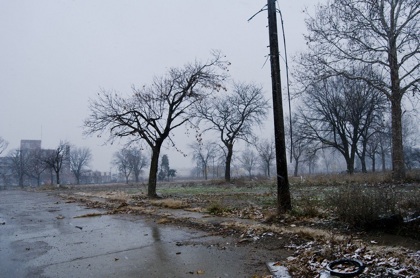
					<b>Andy: </b><em>?Photographer James D. Griffioen has created a haunting series of photographs of Detroit neighborhoods that are reverting to nature . . . cultivation in reverse.?</em><br />
		
		<a href="http://www.jamesgriffioen.net/index.php?/prairies/lost-neighborhoods/"><img src="http://www.culture-making.com/media/lostneighborhoods_420.jpg" alt="photo" /></a><hr />
<div class="author" style="font-size: -1">from "<a href="http://www.jamesgriffioen.net/index.php?/prairies/lost-neighborhoods/">lost neighborhoods</a>," <a href="http://www.jamesgriffioen.net/">James D. Griffioen</a> :: via <a href="http://ayjay.tumblr.com/">more than 95 theses</a></div>		


      ]]></content>
    </entry>    <entry>
      <title>Blue law blues</title>
      <link rel="alternate" type="text/html" href="https://culture-making.com/post/blue_law_blues" />
      <id>tag:culture-makers.com,2025:author/1.1393</id>
      <published>2025-01-02T22:53:00Z</published>
      <updated>2025-01-03T22:54:05Z</updated>
      <author>
            <name>Andy Crouch</name>
            <email>andy@culture-making.com</email>
            
      </author>

      <content type="html"><![CDATA[


					<b>Nate: </b><em>?A litany of unintended consequences from New York City's historical efforts to keep its citizens from temptation, from a review of Kat Long's <a href="http://www.amazon.com/dp/0981504000/cmcom-20">The Forbidden Apple: A Century of Sex & Sin in New York City</a>. Obviously there are many kinds of legislated moral-hazard-reduction that can be quite effective—it's not like a city's maintaining convenient public trash cans just drives litterers underground—but "how might this go horribly wrong?" is always a good question for planners to ask themselves, even if you never fully know the answer until you try it.?</em><br />
		
		<p>When it comes to illicit media, the agents for good and evil, even outside New York, are always symbiotic: pornography, in the experience of many moral crusaders, is like an infuriating weed that loves nothing more than a good pesticide, its strength only enhanced by efforts to tamp it down. But Long also chronicles the way that initiatives to eradicate vice only helped pave the way for its further evolution in the city. Try to eliminate drinking on Sunday by limiting it to hotels, as did the Raines Law of 1896, and suddenly every bar and saloon in Manhattan is putting up cheap dividers to create makeshift accommodations, ideal breeding grounds for prostitution, which thrived in the era of the so-called Raines Law hotels. Try to provide a place where working-class men can find a bathroom that isn’t in a bar, and from that solution — public restrooms — will come another challenge: gay (semipublic) sex.</p><hr />
<div class="author" style="font-size: -1">from "<a href="http://www.nytimes.com/2009/04/05/books/review/Dominus-t.html?scp=2&sq=Kat%20Long,%20The%20Forbidden%20Apple&st=cse">The Past as Peep Show</a>," by Susan Dominus, <a href="http://www.nytimes.com/2009/04/05/books/review/Dominus-t.html?scp=2&sq=Kat%20Long,%20The%20Forbidden%20Apple&st=cse"><i>The New York Times</i></a>, 3 April 2009 :: via <a href="http://freakonomics.blogs.nytimes.com/2009/04/08/how-restrictions-come-back-to-haunt-you/">Freakonomics</a></div>		


      ]]></content>
    </entry>    <entry>
      <title>Painting with Adam&#8217;s palette</title>
      <link rel="alternate" type="text/html" href="https://culture-making.com/post/painting_with_adams_palette" />
      <id>tag:culture-makers.com,2025:author/1.1389</id>
      <published>2025-01-02T22:53:00Z</published>
      <updated>2025-01-03T22:54:05Z</updated>
      <author>
            <name>Andy Crouch</name>
            <email>andy@culture-making.com</email>
            
      </author>

      <content type="html"><![CDATA[


					<b>Nate: </b><em>?Some floral thoughts for the Easter season.?</em><br />
		
		<p>When Adam gardened, he imitated his Maker in a purely recreative act of cultivation and care. He did not need to subdue the earth in order for it to yield fruit. Rather, the plants were Adam&#8217;s palette, and the earth was his canvas. There was nothing but delight in the Garden, for Eden itself means &#8220;garden of delight.&#8221; When I dug my garden in Culpeper, I was preparing a canvas. And when I arranged the flowering plants and shrubs on the freshly turned ground, I saw already the pink peony blossoms with their heads turned down toward the blue iris, and the white phlox standing straight beside the slouching crimson bee balm. I breathed in the sweet honeysuckle and the citrus-scented bergamot.</p><p>I have said on occasion that I think gardening is nearer to godliness than theology. (By &#8220;theology&#8221; I mean the kind of formal written discourse that my special guild of academic theologians does, not the praise of God and communion with divine life that ought to inspire theology at its core.) True gardeners are both iconographers and theologians insofar as these activities are the fruit of prayer &#8220;without ceasing&#8221; (1 Thess. 5:17, NKJV). Likewise, true gardeners never cease to garden, not even in their sleep, because gardening is not just something they do. It is how they live.</p><hr />
<div class="author" style="font-size: -1">from <i><a href="http://www.amazon.com/dp/0802830765/">The Fragrance of God</a></i> (2006), by Vivian Guroian :: via <a href="http://speakingoffaith.publicradio.org/programs/2009/restoringthesenses/guroian-adam.shtml">Speaking of Faith</a>, thanks Emily!</div>		


      ]]></content>
    </entry>    <entry>
      <title>S C Road, Gandhinagar, Bangalore, India</title>
      <link rel="alternate" type="text/html" href="https://culture-making.com/post/s_c_road_gandhinagar_bangalore_india" />
      <id>tag:culture-makers.com,2025:author/1.1367</id>
      <published>2025-01-02T22:53:00Z</published>
      <updated>2025-01-03T22:54:05Z</updated>
      <author>
            <name>Andy Crouch</name>
            <email>andy@culture-making.com</email>
            
      </author>

      <content type="html"><![CDATA[


					<b><p>Nate</p>: </b><em>?It is my new theory that all news is better when accompanied by a garland of marigolds. From the photoblogger: "There's three hours to go before Sudeep's latest film '<a href="http://www.youtube.com/watch?v=YdRYK-cmKTI">Veera Madakari</a>' opens and Kapali Theater in Gandhinagar, the heart of the Kannada Film Industry is House - Full. That's sad news for a fan who woke up late, but good news for the producer, Dinesh Gandhi, as you can see from the garland on the House-Full signboard."?</em><br />
		
		<a href="http://mainsandcrosses.blogspot.com/2009/03/s-c-road-gandhinagar.html"><img src="http://culture-making.com/media/4395084.9f486670.jpg" alt="photo" /></a><hr />
<div class="author" style="font-size: -1">"<a href="http://mainsandcrosses.blogspot.com/2009/03/s-c-road-gandhinagar.html">S C Road, Gandhinagar</a>" [<a href="http://maps.google.com/maps?f=q&source=s_q&hl=en&geocode=&q=s+c+road+gandhinagar&sll=12.971606,77.594376&sspn=0.83372,1.300507&g=bangalore&ie=UTF8&ll=12.977366,77.575439&spn=0.006513,0.01016&t=h&z=17">map</a>], photo by SloganMurugan, <a href="http://mainsandcrosses.blogspot.com/2009/03/s-c-road-gandhinagar.html">Which Main? What Cross?</a>, 22 March 2009</div>		


      ]]></content>
    </entry>    <entry>
      <title>The First Gardeners</title>
      <link rel="alternate" type="text/html" href="https://culture-making.com/post/the_first_gardeners" />
      <id>tag:culture-makers.com,2025:author/1.1354</id>
      <published>2025-01-02T22:53:00Z</published>
      <updated>2025-01-03T22:54:05Z</updated>
      <author>
            <name>Andy Crouch</name>
            <email>andy@culture-making.com</email>
            
      </author>

      <content type="html"><![CDATA[


					<b><p>Andy</p>: </b><em>?Has there ever been a more delightful sequence of nouns in a story about the White House than in this story about the Obamas' planned vegetable garden? This is really terrific news. It's a small thing, of course, but small things count.?</em><br />
		
		<p><img src="http://www.culture-making.com/media/whgarden_420.png" alt="layout of White House garden" /></p><p>The Obamas will feed their love of Mexican food with cilantro, tomatilloes and hot peppers. Lettuces will include red romaine, green oak leaf, butterhead, red leaf and galactic. There will be spinach, chard, collards and black kale. For desserts, there will be a patch of berries. And herbs will include some more unusual varieties, like anise hyssop and Thai basil. A White House carpenter who is a beekeeper will tend two hives for honey.</p><p>Total cost for the seeds, mulch, etc., is $200.</p><p>The plots will be in raised beds fertilized with White House compost, crab meal from the Chesapeake Bay, lime and green sand. Ladybugs and praying mantises will help control harmful bugs.</p><hr />
<div class="author" style="font-size: -1">from "<a href="http://www.nytimes.com/2009/03/19/dining/19garden-web.html">Obamas Prepare to Plant White House Vegetable Garden</a>," by Marian Burros, <a href="http://www.nytimes.com/">NYTimes.com</a>, 19 March 2009</div>		


      ]]></content>
    </entry>    <entry>
      <title>Biophilia</title>
      <link rel="alternate" type="text/html" href="https://culture-making.com/post/biophilia" />
      <id>tag:culture-makers.com,2025:author/1.1345</id>
      <published>2025-01-02T22:53:00Z</published>
      <updated>2025-01-03T22:54:05Z</updated>
      <author>
            <name>Andy Crouch</name>
            <email>andy@culture-making.com</email>
            
      </author>

      <content type="html"><![CDATA[


					<b><p>Andy</p>: </b><em>?Rusty Pritchard is one of the terrific, thoughtful people behind <a href="http://flourishconference.com/">Flourish,</a> a national conference for pastors and church leaders on creation care in Atlanta this May. If you care about these matters, you should be there—I will be.?</em><br />
		
		<p>Loving nature, it turns out, is not just an instinct but a virtue. Like nature itself, the virtue of loving it requires cultivation. There’s no question that the trait of biophilia is good for us and good for God’s garden, but we aren’t able to retain a love for nature simply because it’s built in. We must actively create, and re-create, every generation, a culture that loves, and therefore tends and keeps, God’s garden. </p><p>To <a href="http://www.sciam.com/article.cfm?id=to-save-the-parks">quote researcher Zaradic</a>:</p><blockquote><p>“We need environmental stewards now more than ever. Yet we are raising a generation of young people whose primary experience with nature is virtual. Real nature is a full sensory experience, with frequent open-ended problem-solving opportunities and no off switch. We should all make outdoor play a priority for our children and ourselves. Nature: use it or lose it.”</p>
</blockquote><hr />
<div class="author" style="font-size: -1">from "<a href="http://www.rustypritchard.net/rusty/2009/03/videophilia-replacing-love-of-nature.html">Videophilia replacing love of nature</a>," by Rusty Pritchard, <a href="http://www.rustypritchard.net/rusty/">The Earth is the Lord's</a>, 16 March 2009</div>		


      ]]></content>
    </entry>    <entry>
      <title>Tony Hairdressing for Men</title>
      <link rel="alternate" type="text/html" href="https://culture-making.com/post/tony_hairdressing_for_men" />
      <id>tag:culture-makers.com,2025:author/1.1296</id>
      <published>2025-01-02T22:53:00Z</published>
      <updated>2025-01-03T22:54:05Z</updated>
      <author>
            <name>Andy Crouch</name>
            <email>andy@culture-making.com</email>
            
      </author>

      <content type="html"><![CDATA[


					<b><p>Nate</p>: </b><em>?I'm not sure if the Tony is meant as adjective or proper noun. Perhaps both.?</em><br />
		
		<a href="http://londonshopfronts.tumblr.com/post/70851937/tony-hairdressing-for-men-dean-street-w1"><img src="http://culture-making.com/media/31nE0ng73is1lrqax2CaMhCBo1_500.jpg" alt="photo" /></a><hr />
<div class="author" style="font-size: -1">Tony Hairdressing for Men, <a href="http://maps.google.com/maps?q=london+dean+street+w1+map&oe=utf-8&client=firefox-a&ie=UTF8&split=0&gl=us&ei=Kn2USbnbDor2sAPc4fWxBw&ll=51.513216,-0.131879&spn=0.009588,0.018411&t=h&z=16&iwloc=addr">Dean Street W1</a>, Westminster, London, posted on <a href="http://londonshopfronts.tumblr.com/post/70851937/tony-hairdressing-for-men-dean-street-w1">London Shop Fronts</a></div>		


      ]]></content>
    </entry>    <entry>
      <title>Nuovo cinema Paradiso</title>
      <link rel="alternate" type="text/html" href="https://culture-making.com/post/nuovo_cinema_paradiso" />
      <id>tag:culture-makers.com,2025:author/1.1290</id>
      <published>2025-01-02T22:53:00Z</published>
      <updated>2025-01-03T22:54:05Z</updated>
      <author>
            <name>Andy Crouch</name>
            <email>andy@culture-making.com</email>
            
      </author>

      <content type="html"><![CDATA[


					<b><p>Nate</p>: </b><em>?A very cool, multicontinental tale of artistic culture-keeping: an Italian town run by artists steps in to save, relocate, and reimagine a Netflix-imperiled New York video rental institution.?</em><br />
		
		<p>“Kim’s was the cutting-edge; that was always the business concept,” Mr. Kim said the other day in one of a series of conversations about the fate of his video collection. “But ironically, I didn’t prepare.”</p><p>Last September, in a move that swept through the Internet at viral speed, he issued a public challenge. In a notice pasted on a wall inside the front door, he wrote, “We hope to find a sponsor who can make this collection available to those who have loved Kim’s over the past two decades.” He promised to donate all the films without charge to anyone who would meet three conditions: Keep the collection intact, continue to update it and make it accessible to Kim’s members and others.</p><p>Offers poured in. Every one failed on one count or another. Every offer, that is, except one.</p><hr />
<div class="author" style="font-size: -1">from "<a href="http://www.nytimes.com/2009/02/08/nyregion/thecity/08kims.html?pagewanted=all">La Dolce Video</a>," by Sophia Hollander, <a href="http://www.nytimes.com/2009/02/08/nyregion/thecity/08kims.html?pagewanted=all"><i>The New York Times</i></a>, 6 February 2009 :: via <a href="http://www.kottke.org/09/02/italy-to-the-rescue">kottke.org</a></div>		


      ]]></content>
    </entry>

</feed>