<?xml version="1.0" encoding="utf-8"?>
<feed xmlns="http://www.w3.org/2005/Atom" xml:lang="en">

    <title type="text">Culture Making items tagged children</title>
    <subtitle type="text">Culture Making:Main column content</subtitle>
    <link rel="alternate" type="text/html" href="http://www.culture-making.com/author/" />
    <link rel="self" type="application/atom+xml" href="http://www.culture-making.com/tag/atom/" />
    <updated>2012-02-08T19:38:35Z</updated>
    <rights>Copyright (c) 2012, Nate Barksdale</rights>
    <generator uri="http://www.pmachine.com/" version="1.7.0">ExpressionEngine</generator>
    <id>tag:culture-making.com,2012:02:08</id>


    <entry>
      <title>Play more</title>
      <link rel="alternate" type="text/html" href="http://www.culture-making.com/post/play_more/" />
      <id>tag:culture-making.com,2012:author/9.1917</id>
      <published>2012-02-08T14:29:34Z</published>
      <updated>2012-02-08T19:38:35Z</updated>
      <author>
            <name>Nate Barksdale</name>
            <email>natebarksdale@gmail.com</email>
                  </author>

      <content type="html"><![CDATA[


					<b>Nate: </b><em>“Furniture maker IKEA commissioned a research organization to interview 11,000 parents and children in 25 countries in Europe, North America, Australia, and East Asia to find out their thoughts on children, families, and play (<a href="http://www.facebook.com/pages/Make-the-world-play-more-Playreport-USA/124553714222962?v=app_112957172077213">Facebook</a>, <a href="http://playreport.org/downloads/International_summary/Playreport_International_summary.pdf">PDF</a>). I'd have loved to compare results for the rest of the world too, but I guess there aren't as many IKEAs there.”</em><br />		
		<p><b>Children overwhelmingly prefer playing with their friends and parents over watching TV.</b><br>
When children across the world were asked to choose between watching TV or playing with friends or parents, they overwhelmingly choose to play with friends (89%) and parents (73%) with TV a very poor substitute for social interaction at only 11%.</p>
<p><b>Nearly half of the parents think play should be educational. Children disagree.</b><br>
Nearly half (45%) of all parents think that play is best when it’s educational. This rises to two thirds of parents in China, Slovakia, Czech Rep, Spain, Hungary, Russia, Poland and Portugal. A further minority at 17% (China, Italy, Russia and US) actually prefer their children to learn things rather than to simply play. 27% think play should always have a purpose. As for the children, 51% actually prefer to play rather than learn.</p><hr />
<div class="author" style="font-size: -1">from "<a href="http://www.wired.com/geekdad/2010/05/ikeas-playreport-sends-us-a-message-our-kids-want-to-play-with-us/">Ikea’s PlayReport Sends Us a Message: Our Kids Want To Play With Us</a>," by Jeb Denmead, <a href="http://www.wired.com/geekdad/2010/05/ikeas-playreport-sends-us-a-message-our-kids-want-to-play-with-us/">GeekDad | Wired.com</a>, 27 May 2010</div>		


      ]]></content>
    </entry>

    <entry>
      <title>To copy is human</title>
      <link rel="alternate" type="text/html" href="http://www.culture-making.com/post/to_copy_is_human/" />
      <id>tag:culture-making.com,2012:author/9.1905</id>
      <published>2012-02-08T14:29:34Z</published>
      <updated>2012-02-08T19:38:35Z</updated>
      <author>
            <name>Nate Barksdale</name>
            <email>natebarksdale@gmail.com</email>
                  </author>

      <content type="html"><![CDATA[


					<b>Nate: </b><em>“The author of this study's theory is that this penchant for overimitation may be crucial to humans' ability to create and transmit culture. For us, "it is knowing the way things are done, not what gets done, that is important."”</em><br />		
		<p>In previous studies, dogs and chimps taught to open a box and retrieve a toy copied their teacher’s toy-seeking behavior only when it proved efficient. When the instructing adult added irrelevant actions, such as brushing a feather along the edge of the box before opening it, the animal trainees skipped them, doing only what was necessary to get to the hidden toy. But human children copied every detail, even the pointless brush of the feather.</p><p>“Animals focus on getting the job done,” explains Mark Nielsen, a psychologist at the University of Queensland in Brisbane, Australia. “Humans seem to almost forget about the outcome and copy everything we see.”</p><hr />
<div class="author" style="font-size: -1">from "<a href="http://news.sciencemag.org/sciencenow/2010/05/kids-overimitate-adults-regardle.html?rss=1">Kids Overimitate Adults, Regardless of Culture</a>," by Gisela Telis, <a href="http://news.sciencemag.org/sciencenow/2010/05/kids-overimitate-adults-regardle.html?rss=1">ScienceNOW</a>, 7 May 2010</div>		


      ]]></content>
    </entry>

    <entry>
      <title>What do artists have to do with the church nursery?</title>
      <link rel="alternate" type="text/html" href="http://www.culture-making.com/post/what_do_artists_have_to_do_with_the_church_nursery/" />
      <id>tag:culture-making.com,2012:author/9.1892</id>
      <published>2012-02-08T14:29:34Z</published>
      <updated>2012-02-08T19:38:35Z</updated>
      <author>
            <name>Nate Barksdale</name>
            <email>natebarksdale@gmail.com</email>
                  </author>

      <content type="html"><![CDATA[


			<p align="center"><embed type="application/x-shockwave-flash" src="http://www.google.com/reader/ui/3247397568-audio-player.swf?audioUrl=
http://media.city-gates.org/podcast_episodes/689/audio/David_Taylor_original.mp3" width="420" height="27" allowscriptaccess="never" quality="best" bgcolor="#ffffff" wmode="window" flashvars="playerMode=embedded" /></p><br />
<b>Christy: </b><em>“Continuing with the theme of the past week, here's my recent interview with W. David O. Taylor for IAM Conversations, a delightful dialogue inspired by <i><a href="http://www.amazon.com/gp/product/0801071917?ie=UTF8&tag=cmcom-20&linkCode=as2&camp=1789&creative=9325&creativeASIN=0801071917">For the Beauty of the Church</a></i>. Any legitimate conversation about church communities will eventually lead to the topic of "The Children's Wing," and ours, I am proud to say, was no different. What do artists have to do with the nursery? David has some thoughts, but they're probably not what you expect.”</em><br /><hr />
<span style="font-size: -1">"<a href="http://www.internationalartsmovement.org/podcasts/IAMglobal/episodes/689-w-david-o-taylor-on-for-the-beauty-of-the-church">W. David O. Taylor on <i>For the Beauty of the Church</i></a>," interviewed by Christy Tennant, <a href="http://www.internationalartsmovement.org/podcasts/IAMglobal/episodes/689-w-david-o-taylor-on-for-the-beauty-of-the-church">International Arts Movement</a>, 15 April 2010</span>


      ]]></content>
    </entry>

    <entry>
      <title>Axe Cop!</title>
      <link rel="alternate" type="text/html" href="http://www.culture-making.com/post/axe_cop/" />
      <id>tag:culture-making.com,2012:author/9.1827</id>
      <published>2012-02-08T14:29:34Z</published>
      <updated>2012-02-08T19:38:35Z</updated>
      <author>
            <name>Nate Barksdale</name>
            <email>natebarksdale@gmail.com</email>
                  </author>

      <content type="html"><![CDATA[


					<b>Nate: </b><em>“<a href="http://axecop.com/index.php">Axe Cop</a> is a web comic written by Malachai Nicolle (age 5) and illustrated by his older brother Ethan (age 29). I love the art that can result from listening to and taking seriously a creative voice that would usually have a far, far smaller audience. Here's a video of the duo <a href="http://www.youtube.com/watch?v=kQiCwmolnYw&feature=player_embedded">brainstorming Axe Cop #3</a>.”</em><br />		
		<a href="http://axecop.com/index.php/acepisodes/read/episode_1/"><img src="http://culture-making.com/media/axecop.jpg" alt="image" /></a><hr />
<div class="author" style="font-size: -1">from "<a href="http://axecop.com/index.php/acepisodes/read/episode_1/">Axe Cop: Episode 1</a>," by Malachai and Ethan Nicolle, <a href="http://axecop.com/index.php/acepisodes/read/episode_1/">Episodes</a>, 2009–2010 :: via <a href="http://www.wired.com/geekdad/2010/02/axe-cop/">GeekDad</a></div>		


      ]]></content>
    </entry>

    <entry>
      <title>Indian schoolroom posters</title>
      <link rel="alternate" type="text/html" href="http://www.culture-making.com/post/indian_schoolroom_posters/" />
      <id>tag:culture-making.com,2012:author/9.1786</id>
      <published>2012-02-08T14:29:34Z</published>
      <updated>2012-02-08T19:38:35Z</updated>
      <author>
            <name>Nate Barksdale</name>
            <email>natebarksdale@gmail.com</email>
                  </author>

      <content type="html"><![CDATA[


					<b>Nate: </b><em>“Some of my favorite souvenirs from India are posters for schoolchildren of the sort sold in bookshops and street-side newsstands. They're always approachable and informative (you know, for kids!) and in me at least inspire lots of far-reaching thoughts about culture and categories. When you have an outsider's vantage, it's easier to notice the whims of taxonomy: why display this sort of thing, and not that one. The odd notes always seem most resonant and mysterious: is the strange language and selection a product of shoddy research (<a href="http://ibdmaphouse.com/PhotoZoom.aspx?PCode=89">Types of Rocks</a>: Volcanic, Metamorphic, Sedimentary, Igneous, Layerd, Sharp, Small, Big, Smooth), or a sign that the obvious groupings don't always hold up across cultures?”</em><br />		
		<a href="http://ibdmaphouse.com/Catalog_I.aspx?GPID=2&GrpName;=&SGPID=1&SubGrpName=10 X 14 INCH CHARTS"><img src="http://culture-making.com/media/maphouse.jpg" alt="image" /></a><hr />
<div class="author" style="font-size: -1">Newsprint and laminated schoolroom posters, 2–50 Rupees each, from the vast semi-online catalog of <a href="http://ibdmaphouse.com/Catalog_I.aspx?GPID=2&GrpName;=&SGPID=1&SubGrpName=10 X 14 INCH CHARTS">Indian Book Depot (Map House)</a>, New Delhi, India :: via <a href="http://www.thingsmagazine.net/">things magazine</a></div>		


      ]]></content>
    </entry>

    <entry>
      <title>Valuing what’s easiest to measure</title>
      <link rel="alternate" type="text/html" href="http://www.culture-making.com/post/valuing_whats_easiest_to_measure/" />
      <id>tag:culture-making.com,2012:author/9.1777</id>
      <published>2012-02-08T14:29:34Z</published>
      <updated>2012-02-08T19:38:35Z</updated>
      <author>
            <name>Nate Barksdale</name>
            <email>natebarksdale@gmail.com</email>
                  </author>

      <content type="html"><![CDATA[


					<b>Nate: </b><em>“Perseverance and discipline likely matter more than intelligence and innate talent when it comes to being successful in one's endeavors. And—according to the study cited at the end of the article—praising children for their hard work rather than their innate skill yields significant improvements in test results; kids praised for their talents actually start doing worse when they encounter significant challenges.”</em><br />		
		<p>Lewis Terman, the inventor of the Stanford-Binet IQ test, came to a similar conclusion. He spent decades following a large sample of “gifted” students, searching for evidence that his measurement of intelligence was linked to real world success. While the most accomplished men did have slightly higher scores, Terman also found that other traits, such as “perseverance,” were much more pertinent. Terman concluded that one of the most fundamental tasks of modern psychology was to figure out why intelligence is not a more important part of achievement: “Why this is so, and what circumstances affect the fruition of human talent, are questions of such transcendent importance that they should be investigated by every method that promises the slightest reduction of our present ignorance.”</p><p>Unfortunately, in the decades following Terman’s declaration, little progress was made on the subject. Because intelligence was so easy to measure  - the IQ test could be given to schoolchildren, and often took less than an hour  - it continued to dominate research on individual achievement.</p><p>The end result, says James J. Heckman, a Nobel Prize-winning economist at the University of Chicago, is that “there was a generation of social scientists who focused almost exclusively on trying to raise IQ and academic test scores. The assumption was that intelligence is what mattered and what could be measured, and so everything else, all these non-cognitive traits like grit and self-control, shouldn’t be bothered with.”</p><hr />
<div class="author" style="font-size: -1">from "<a href="http://www.boston.com/bostonglobe/ideas/articles/2009/08/02/the_truth_about_grit/?page=3">The truth about grit</a>," by Jonah Lehrer, <a href="http://www.boston.com/bostonglobe/ideas/articles/2009/08/02/the_truth_about_grit/?page=3"><i>The Boston Globe</i></a>, 2 August 2009 :: via <a href="http://www.3quarksdaily.com/3quarksdaily/2009/08/true-grit.html">3quarksdaily</a></div>		


      ]]></content>
    </entry>

    <entry>
      <title>Ecstatically between the pillows and the books</title>
      <link rel="alternate" type="text/html" href="http://www.culture-making.com/post/ecstatically_between_the_pillows_and_the_books/" />
      <id>tag:culture-making.com,2012:author/9.1758</id>
      <published>2012-02-08T14:29:34Z</published>
      <updated>2012-02-08T19:38:35Z</updated>
      <author>
            <name>Nate Barksdale</name>
            <email>natebarksdale@gmail.com</email>
                  </author>

      <content type="html"><![CDATA[


					<b>Nate: </b><em>“This is from a short story taken from David Foster Wallace's posthumous novel in progress, <i>The Pale King</i>. The whole story, an exploration of childlike faith, is worth reading and rereading—indeed, the emotion I most strongly associate with reading David Foster Wallace's work is a (generally somewhat frustrated) impulse to reread. But in this case the impulse comes gladly and with a touch of, and a feel for, grace.”</em><br />		
		<p>At any rate, the best analogy for the experience of hearing these childhood “voices” of mine is that it was like going around with your own private masseur, who spent all his time giving you back—and shoulder—rubs (which my biological mother also used to do whenever I was sick in bed, using rubbing alcohol and baby powder and also changing the pillowcases, so that they were clean and cool; the experience of the voices was analogous to the feeling of turning a pillow over to the cool side). Sometimes the experience of the voices was ecstatic, sometimes so much so that it was almost too intense for me—as when you first bite into an apple or a confection that tastes so delicious and causes such a flood of oral juices that there is a moment of intense pain in your mouth and glands—particularly in the late afternoons of spring and summer, when the sunlight on sunny days achieved moments of immanence and became the color of beaten gold and was itself (the light, as if it were taste) so delicious that it was almost too much to stand, and I would lie on the pile of large pillows in our living room and roll back and forth in an agony of delight and tell my mother, who always read on the couch, that I felt so good and full and ecstatic that I could hardly bear it, and I remember her pursing her lips, trying not to laugh, and saying in the driest possible voice that she found it hard to feel too much sympathy or concern for this problem and was confident that I could survive this level of ecstasy, and that I probably didn’t need to be rushed to the emergency room, and at such moments my love and affection for my mother’s dry humor and love became, stacked atop the original ecstasy, so intense that I almost had to stifle a scream of pleasure as I rolled ecstatically between the pillows and the books on the floor. I do not have any real idea what my mother—an exceptional, truly lovable woman—made of having a child who sometimes suffered actual fits of ecstasy; and I do not know whether she herself had them. Nevertheless, the experience of the real but unobservable and unexplainable “voices” and the ecstatic feelings they often aroused doubtless contributed to my reverence for magic and my faith that magic not only permeated the everyday world but did so in a way that was thoroughly benign and altruistic and wished me well. I was never the sort of child who believed in “monsters under the bed” or vampires, or who needed a night-light in his bedroom; on the contrary, my father (who clearly “enjoyed” me and my eccentricities) once laughingly told my mother that he thought I might suffer from a type of benign psychosis called “antiparanoia,” in which I seemed to believe that I was the object of an intricate universal conspiracy to make me so happy I could hardly stand it.</p><hr />
<div class="author" style="font-size: -1">from "<a href="http://www.newyorker.com/fiction/features/2009/12/14/091214fi_fiction_wallace?currentPage=all">All That</a>," by David Foster Wallace, <a href="http://www.newyorker.com/fiction/features/2009/12/14/091214fi_fiction_wallace?currentPage=all"><i>The New Yorker</i></a>, 14 December 2009</div>		


      ]]></content>
    </entry>

    <entry>
      <title>The private languages of Lego</title>
      <link rel="alternate" type="text/html" href="http://www.culture-making.com/post/the_private_languages_of_lego/" />
      <id>tag:culture-making.com,2012:author/9.1716</id>
      <published>2012-02-08T14:29:34Z</published>
      <updated>2012-02-08T19:38:35Z</updated>
      <author>
            <name>Nate Barksdale</name>
            <email>natebarksdale@gmail.com</email>
                  </author>

      <content type="html"><![CDATA[


					<b>Nate: </b><em>“I recall having a strong sense of Lego nomenclature as well, though I'm hazy on the details. I should go out to the storage bins in the garage to root around and see if the touch of plastic can retrieve any specific terms. Meanwhile, Language Log's Geoff Pullum <a href="http://languagelog.ldc.upenn.edu/nll/?p=1874">sums up</a> this delightful article well: "It's about the deep-seatedness of children's need to have names for all the things they deal with — and the lack of any necessity for there to be pre-existing names in the language they happen to have learned."”</em><br />		
		<div style="float:right; padding:15px 5px 5px 5px"><a href="http://www.themorningnews.org/archives/opinions/a_common_nomenclature_for_lego_families.php"><img src="http://culture-making.com/media/legochart.jpg" alt="image"></a></div>
<p>Then, when another seven-year-old came round for tea after school one day, I overheard the two of them, busy in the spaceship construction yard that used to be our living room, get into a linguistic thicket.</p><p>“Can you see any clippy bits?” my son asked his friend. The friend was flummoxed. “Do you mean handy bits?” he asked, pointing.</p><p>
“Yes,” replied my boy. “Clippy bits.”</p><p>
Of course! This language of Lego isn’t just something our family has invented; every Lego-building family must have its own vocabulary. And the words they use (mostly invented by the children, not the adults) are likely to be different every time. But how different? And what sort of words?</p><hr />
<div class="author" style="font-size: -1">from "<a href="http://www.themorningnews.org/archives/opinions/a_common_nomenclature_for_lego_families.php">A Common Nomenclature for Lego Families</a>," by Giles Turnbull, <a href="http://www.themorningnews.org/archives/opinions/a_common_nomenclature_for_lego_families.php">The Morning News</a>, 4 November 2009 :: via <a href="http://www.languagehat.com/archives/003679.php">languagehat.com</a></div>		


      ]]></content>
    </entry>

    <entry>
      <title>Butterfly in the sky, I could go twice as high</title>
      <link rel="alternate" type="text/html" href="http://www.culture-making.com/post/butterfly_in_the_sky_i_could_go_twice_as_high/" />
      <id>tag:culture-making.com,2012:author/9.1617</id>
      <published>2012-02-08T14:29:34Z</published>
      <updated>2012-02-08T19:38:35Z</updated>
      <author>
            <name>Nate Barksdale</name>
            <email>natebarksdale@gmail.com</email>
                  </author>

      <content type="html"><![CDATA[


					<b>Nate: </b><em>“My mother, a longtime public school librarian, is a big fan of Reading Rainbow, but when I broke the news to her that the show had been cancelled after a 26-year run, she wasn't as sad as, say, I was. "I don't think it's such a big deal; they can still show kids the reruns." So my sadness is probably a significant bit of gen-x nostalgia. But don't take my word for it ...”</em><br />		
		<p>[T]he funding crunch is partially to blame, but the decision to end <i>Reading Rainbow</i> can also be traced to a shift in the philosophy of educational television programming. ... PBS, CPB and the Department of Education put significant funding toward programming that would teach kids <i>how</i> to read — but that's not what <i>Reading Rainbow</i> was trying to do. "<i>Reading Rainbow</i> taught kids <i>why</i> to read," Grant says. "You know, the love of reading — [the show] encouraged kids to pick up a book and to read."</p><p>Linda Simensky, vice president for children's programming at PBS, says that when <i>Reading Rainbow</i> was developed in the early 1980s, it was an era when the question was: "How do we get kids to read books?" ... Research has directed programming toward phonics and reading fundamentals as the front line of the literacy fight. <i>Reading Rainbow</i> occupied a more luxurious space — the show operated on the assumption that kids already had basic reading skills and instead focused on fostering a love of books.</p><hr />
<div class="author" style="font-size: -1">from "<a href="http://www.npr.org/templates/story/story.php?storyId=112312561">'Reading Rainbow' Reaches Its Final Chapter</a>," by Ben Calhoun, <a href="http://www.npr.org/templates/story/story.php?storyId=112312561">NPR</a>, 28 August 2009 :: via <a href="http://www.themorningnews.org/archives/headlines/2009/September/01/">The Morning News</a></div>		


      ]]></content>
    </entry>

    <entry>
      <title>The utility of guilt</title>
      <link rel="alternate" type="text/html" href="http://www.culture-making.com/post/the_utility_of_guilt/" />
      <id>tag:culture-making.com,2012:author/9.1596</id>
      <published>2012-02-08T14:29:34Z</published>
      <updated>2012-02-08T19:38:35Z</updated>
      <author>
            <name>Nate Barksdale</name>
            <email>natebarksdale@gmail.com</email>
                  </author>

      <content type="html"><![CDATA[


					<b>Nate: </b><em>“Guilt's benefits, in ascending order: it keeps us from being sociopaths; reminds us that we shouldn't do bad things and that when we do we should make (or seek) amends; and it may serve as a proxy for self-control, making possible the growth and development befitting a genuine fruit of the spirit.”</em><br />		
		<p>Guilt in its many varieties — Puritan, Catholic, Jewish, etc. — has often gotten a bad rap, but psychologists keep finding evidence of its usefulness. Too little guilt clearly has a downside — most obviously in sociopaths who feel no remorse, but also in kindergartners who smack other children and snatch their toys. Children typically start to feel guilt in their second year of life, says Grazyna Kochanska, who has been tracking children’s development for two decades in her laboratory at the University of Iowa....</p><p>“Children respond with acute and intense tension and negative emotions when they are tempted to misbehave, or even anticipate violating norms and rules,” Dr. Kochanska said. “They remember, often subconsciously, how awful they have felt in the past.”</p><p>In Dr. Kochanska’s latest studies, published in the August issue of The Journal of Personality and Social Psychology, she and colleagues found that 2-year-olds who showed more chagrin during the broken-toy experiment went on to have fewer behavioral problems over the next five years. That was true even for the ones who scored low on tests measuring their ability to focus on tasks and suppress strong desires to act impulsively.</p><hr />
<div class="author" style="font-size: -1">from "<a href="http://www.nytimes.com/2009/08/25/science/25tier.html?_r=1&ref=science">Guilt and Atonement on the Path to Adulthood</a>," by John Tierney, <a href="http://www.nytimes.com/2009/08/25/science/25tier.html?_r=1&ref=science"><i>The New York TImes</i></a>, 24 August 2009 :: via <a href="http://www.3quarksdaily.com/3quarksdaily/2009/08/guilt-and-atonement-on-the-path-to-adulthood-.html">3quarksdaily</a></div>		


      ]]></content>
    </entry>

    <entry>
      <title>A Gestures and postures triple&#45;header</title>
      <link rel="alternate" type="text/html" href="http://www.culture-making.com/post/a_gestures_and_postures_triple-header/" />
      <id>tag:culture-making.com,2012:author/9.1457</id>
      <published>2012-02-08T14:29:34Z</published>
      <updated>2012-02-08T19:38:35Z</updated>
      <author>
            <name>Nate Barksdale</name>
            <email>natebarksdale@gmail.com</email>
                  </author>

      <content type="html"><![CDATA[


<p>University of Colorado psychologist Geoffrey Cohen has done a couple of studies showing an easy way to help black students perform better on standardized tests. Simply having them spend 15 minutes <a href="http://bps-research-digest.blogspot.com/2009/04/simple-psychological-intervention.html">writing about a value they held dear</a> (family, music, sports, politics, friends, art), either right before the exam or just several times a semester, led to a jump in test scores compared to peers (majority culture students did not experience a similar boost).</p>
<p>Meanwhile, a study from Radbound University Nijmegen showed that students playing a computerized word game <a href="http://www.ru.nl/aspx/download.aspx?File=/contents/pages/173707/manuscript_psychscience.pdf">performed better if they took a step backward</a> before each round than if they took a step to the side or no step at all. The physicality of adding distance to widen one's view apparently triggers a mental analogue.</p>
<p align="right">:: via <a href="http://www.veryshortlist.com/science/daily.cfm/review/1237/Website/psychological-intervention-boosts-school-performance/?tp">VSL:Science</a>, 27 and 28 May 2009</p>
<p>Finally, a joint Canadian–American study suggests the ways that exposure to brands can elicit certain types of improved performance: "Participants primed with Apple logos <a href="http://www.typogabor.com/Media/Memoire_des_marques.pdf">behave more creatively</a> than IBM-primed and controls; Disney-primed participants behave more honestly than E!-primed and controls."</p><p align="right">:: via <a href="http://improbable.com/airchives/miniair/2009/mini2009-05.htm">The Annals of Improbable Research</a></p><br />


      ]]></content>
    </entry>

    <entry>
      <title>What do 80 texts a day add up to?</title>
      <link rel="alternate" type="text/html" href="http://www.culture-making.com/post/what_do_80_texts_a_day_add_up_to/" />
      <id>tag:culture-making.com,2012:author/9.1453</id>
      <published>2012-02-08T14:29:34Z</published>
      <updated>2012-02-08T19:38:35Z</updated>
      <author>
            <name>Nate Barksdale</name>
            <email>natebarksdale@gmail.com</email>
                  </author>

      <content type="html"><![CDATA[


					<b>Nate: </b><em>“I found this detail more surprising than the 80-text-messages-a-day average for teens: they're sending a lot of those texts ... to their parents?”</em><br />		
		<p>The rise in texting is too recent to have produced any conclusive data on health effects. But Sherry Turkle, a psychologist who is director of the Initiative on Technology and Self at the Massachusetts Institute of Technology and who has studied texting among teenagers in the Boston area for three years, said it might be causing a shift in the way adolescents develop.</p><p>“Among the jobs of adolescence are to separate from your parents, and to find the peace and quiet to become the person you decide you want to be,” she said. “Texting hits directly at both those jobs.”</p><p>Psychologists expect to see teenagers break free from their parents as they grow into autonomous adults, Professor Turkle went on, “but if technology makes something like staying in touch very, very easy, that’s harder to do; now you have adolescents who are texting their mothers 15 times a day, asking things like, ‘Should I get the red shoes or the blue shoes?’”</p><hr />
<div class="author" style="font-size: -1">from "<a href="http://www.nytimes.com/2009/05/26/health/26teen.html?hpw">Texting May Be Taking a Toll on Teenagers</a>," by Katie Hafner, <a href="http://www.nytimes.com/2009/05/26/health/26teen.html?hpw"><i>The New York Times</i></a>, 26 May 2009</div>		


      ]]></content>
    </entry>

    <entry>
      <title>Invest now in youth prevention!</title>
      <link rel="alternate" type="text/html" href="http://www.culture-making.com/post/invest_now_in_youth_prevention/" />
      <id>tag:culture-making.com,2012:author/9.1373</id>
      <published>2012-02-08T14:29:34Z</published>
      <updated>2012-02-08T19:38:35Z</updated>
      <author>
            <name>Nate Barksdale</name>
            <email>natebarksdale@gmail.com</email>
                  </author>

      <content type="html"><![CDATA[


			<b>Nate: </b><em>“I should start a reverse-marketing company that will sell strategies to offend and drive away any targeted demographic. Why bother appealing to the ones you want when you can just get rid of the rest?”</em><br />
<div class="author" style="font-size: -1">a <a href="http://www.tomorrowmuseum.com/2009/03/26/architecture-of-shaming-teenagers/">Tomorrow Museum</a> post by Joanne, 26 March 2009</div><hr />		
		<p><a href="http://news.bbc.co.uk/2/hi/uk_news/england/nottinghamshire/7963347.stm">Residents of a Nottinghamshire housing estate have installed  pink lights which show up teenagers’ spots in a bid to stop them gathering in the area.</a> Says <a href="http://architectures.danlockton.co.uk/2009/03/26/anti-teenager-pink-lights-to-show-up-acne/">Dan Lockton</a>, pointing out its resemblance to the <a href="http://architectures.danlockton.co.uk/2006/09/28/secret-alarm-becomes-dance-track/">Mosquito</a>, “I don’t understand why Britain hates its young people so much. But I can see it storing up a great deal of problems for the future.”</p>


      ]]></content>
    </entry>

    <entry>
      <title>Sign your work!</title>
      <link rel="alternate" type="text/html" href="http://www.culture-making.com/post/sign_your_work/" />
      <id>tag:culture-making.com,2012:author/9.1365</id>
      <published>2012-02-08T14:29:34Z</published>
      <updated>2012-02-08T19:38:35Z</updated>
      <author>
            <name>Nate Barksdale</name>
            <email>natebarksdale@gmail.com</email>
                  </author>

      <content type="html"><![CDATA[


					<b>Nate: </b><em>“A Gloucestershire, UK shopkeeper has found a partial solution to the tragedy of the commons: de-commodifying the village children's litter. It helps that her community is small enough that she knows most of the kids by name (and that they don't have many other options for their snack food needs when she cuts them off). In this <a href="http://news.bbc.co.uk/1/hi/england/7953144.stm">video clip</a>, she says that the litterers she catches nearly always prefer 10 minutes of trash pickup to a multiday candy ban.”</em><br />		
		<div style="float:right; padding:15px 5px 5px 5px"><img src="http://culture-making.com/media/_45582652_sweets.jpg" alt="image"></div><p>A village shopkeeper is marking sweet wrappers and drinks bottles with the names of children who buy them in a bid to discourage them from littering.</p><p>Yvonne Froud, 52, took action after becoming fed up with the rubbish collecting in Joys Green in the Forest of Dean, Gloucestershire&#8230;.</p><p>Mrs Froud said if named wrappers were found on the streets, she had a chat to the &#8220;offender&#8221; who was temporarily banned from the shop or asked to pick up some litter as a consequence.</p><hr />
<div class="author" style="font-size: -1">from "<a href="http://news.bbc.co.uk/2/hi/uk_news/england/gloucestershire/7952397.stm">Store owner takes on litterbugs</a>," <a href="http://news.bbc.co.uk/2/hi/uk_news/england/gloucestershire/7952397.stm">BBC News</a>, 19 March 2009 :: via <a href="http://freakonomics.blogs.nytimes.com/2009/03/23/rubbish-with-your-name-on-it/">NYTimes.com Freakonomics Blog</a></div>		


      ]]></content>
    </entry>

    <entry>
      <title>Talent is overrated, practice what you love</title>
      <link rel="alternate" type="text/html" href="http://www.culture-making.com/post/talent_is_overrated_practice_what_you_love/" />
      <id>tag:culture-making.com,2012:author/9.1333</id>
      <published>2012-02-08T14:29:34Z</published>
      <updated>2012-02-08T19:38:35Z</updated>
      <author>
            <name>Nate Barksdale</name>
            <email>natebarksdale@gmail.com</email>
                  </author>

      <content type="html"><![CDATA[


					<b>Nate: </b><em>“I'm loving the typography here, and all the other idiosyncrasies (the over-adornment of the band name, the separate "when" and "time" categories, the image of 9–14-year-olds dragging their own drums and pianos to the audition). And as Stephen Dubner points out, any young group with the organizational skills to book a New York room for two weekend days running has a decent chance they'll stick with the enterprise until they're actually good.”</em><br />		
		<div style="float:right; padding:15px 5px 5px 10px"><img src="http://culture-making.com/media/Punx2_420.jpg" alt="image"></div><p>[Psychologist Anders Ericsson’s] work, compiled in the <a href="http://www.amazon.com/dp/0521600812/cmcom-20"><i>Cambridge Handbook of Expertise and Expert Performance</i></a>, a 900-page academic book that will be published next month, makes a rather startling assertion: the trait we commonly call talent is highly overrated. Or, put another way, expert performers — whether in memory or surgery, ballet or computer programming — are nearly always made, not born. And yes, practice does make perfect. These may be the sort of clichés that parents are fond of whispering to their children. But these particular clichés just happen to be true.</p><p>Ericsson’s research suggests a third cliché as well: when it comes to choosing a life path, you should do what you love — because if you don’t love it, you are unlikely to work hard enough to get very good. Most people naturally don’t like to do things they aren’t “good” at. So they often give up, telling themselves they simply don’t possess the talent for math or skiing or the violin. But what they really lack is the desire to be good and to undertake the deliberate practice that would make them better.
</p><hr />
<div class="author" style="font-size: -1">from "<a href="http://www.nytimes.com/2006/05/07/magazine/07wwln_freak.html?_r=1">A Star is Made</a>," by Stephen J. Dubner and Steven D. Levitt, <a href="http://freakonomics.blogs.nytimes.com/2009/03/04/kid-rock/"><i>New York Times Magazine</i></a>, 7 May 2006 :: image and link via <a href="http://freakonomics.blogs.nytimes.com/2009/03/04/kid-rock/">this Freakonomics post</a></div>		


      ]]></content>
    </entry>

    <entry>
      <title>Steeling their courage</title>
      <link rel="alternate" type="text/html" href="http://www.culture-making.com/post/steeling_their_courage/" />
      <id>tag:culture-making.com,2012:author/9.1308</id>
      <published>2012-02-08T14:29:34Z</published>
      <updated>2012-02-08T19:38:35Z</updated>
      <author>
            <name>Nate Barksdale</name>
            <email>natebarksdale@gmail.com</email>
                  </author>

      <content type="html"><![CDATA[


			<p align="center"><embed src="http://services.brightcove.com/services/viewer/federated_f8/271552990" bgcolor="#FFFFFF" flashVars="videoId=13796845001&amp;playerId=271552990&amp;viewerSecureGatewayURL=https://console.brightcove.com/services/amfgateway&amp;servicesURL=http://services.brightcove.com/services&amp;cdnURL=http://admin.brightcove.com&amp;domain=embed&amp;autoStart=false&amp;" base="http://admin.brightcove.com" name="flashObj" width="420" height="550" seamlesstabbing="false" type="application/x-shockwave-flash" swLiveConnect="true" pluginspage="http://www.macromedia.com/shockwave/download/index.cgi?P1_Prod_Version=ShockwaveFlash"></embed>
</p><br />
<b>Nate: </b><em>“Ironworkers expanding the the Dana-Farber Cancer Center have resumed a unique tradition—painting the names of young cancer patients on the girders as they go up. I love this sort of soon-hidden graffiti, and it's nice to see there's more than one way to get your name on a big new medical building.”</em><br /><hr /><span style="font-size: -1">from "<a href="http://www.boston.com/news/local/massachusetts/articles/2009/02/21/steeling_their_courage/">Ironworkers at Dana-Farber resume a beloved ritual, providing moments of joy for young cancer patients</a>," by Michael Levenson, <a href="http://www.boston.com/news/local/massachusetts/articles/2009/02/21/steeling_their_courage/"><i>The Boston Globe</i></a>, 21 February 2009 :: via <a href="http://www.tomorrowmuseum.com/2009/02/22/graffiti-cancer-boston/">Tomorrow Museum</a></span>


      ]]></content>
    </entry>

    <entry>
      <title>More time with mom and dad</title>
      <link rel="alternate" type="text/html" href="http://www.culture-making.com/post/more_time_with_mom_and_dad/" />
      <id>tag:culture-making.com,2012:author/9.1285</id>
      <published>2012-02-08T14:29:34Z</published>
      <updated>2012-02-08T19:38:35Z</updated>
      <author>
            <name>Nate Barksdale</name>
            <email>natebarksdale@gmail.com</email>
                  </author>

      <content type="html"><![CDATA[


					<b>Andy: </b><em>“The latest installment from the Department of Counterintuitive But Encouraging Trends, or maybe it's more evidence that <a href="http://www.culture-making.com/post/1184">"Cat's in the Cradle"</a> really did change the world.”</em><br />		
		<p>Parents today spend much more time with their children than they did 40 years ago. The sociologists Suzanne Bianchi, John Robinson and Melissa Milkie report that married mothers in 2000 spent 20 percent more time with their children than in 1965. Married fathers spent more than twice as much time.</p><p>A study by John Sandberg and Sandra Hofferth at the University of Michigan showed that by 1997 children in two-parent families were getting six more hours a week with Mom and four more hours with Dad than in 1981. And these increases occurred even as more mothers entered the labor force.</p><hr />
<div class="author" style="font-size: -1">from "<a href="http://www.nytimes.com/2009/02/05/opinion/05coontz.html">Till Children Do Us Part</a>," by Stephanie Coontz, <a href="http://www.nytimes.com/">NYTimes.com</a>, 4 February 2009 :: via <a href="http://jamesjchoi.blogspot.com/">The .Plan: A Quasi-Blog</a></div>		


      ]]></content>
    </entry>

    <entry>
      <title>The Red Balloon</title>
      <link rel="alternate" type="text/html" href="http://www.culture-making.com/post/the_red_balloon/" />
      <id>tag:culture-making.com,2012:author/9.1282</id>
      <published>2012-02-08T14:29:34Z</published>
      <updated>2012-02-08T19:38:35Z</updated>
      <author>
            <name>Nate Barksdale</name>
            <email>natebarksdale@gmail.com</email>
                  </author>

      <content type="html"><![CDATA[


			<p align="center"><embed id="VideoPlayback" src="http://video.google.com/googleplayer.swf?docid=8080999735593908602&amp;hl=en&amp;fs=true" style="width:420px;height:335px" allowFullScreen="true" allowScriptAccess="always" type="application/x-shockwave-flash"> </embed></p><br />
<b>Nate: </b><em>“I watched this legendary short film a few months ago—I thought I'd seen it before, but evidently just felt like I had via references in <a href="http://en.wikipedia.org/wiki/The_Crepes_of_Wrath">The Simpsons</a>, <a href="http://www.youtube.com/watch?v=jQYQTFudrqc">German 80s pop</a>, and the forthcoming Pixar film <a href="http://www.pixar.com/featurefilms/up/">Up</a>, which in some ways begins with The Red Balloon's (to my mind mildly disturbing) closing scene. Fun fact: TRB is the only dialogue-free film to have won the Oscar for best original screenplay.”</em><br /><hr /><span style="font-size: -1"><i><a href="http://video.google.com/videoplay?docid=8080999735593908602&hl=en">The Red Balloon (Le Ballon rouge)</a></i>, directed by Albert Lamorisse, 1956 :: via <a href="http://swissmiss.typepad.com/weblog/2009/01/the-red-balloon.html">swissmiss</a></span>


      ]]></content>
    </entry>

    <entry>
      <title>Rich objects</title>
      <link rel="alternate" type="text/html" href="http://www.culture-making.com/post/rich_objects/" />
      <id>tag:culture-making.com,2012:author/9.1214</id>
      <published>2012-02-08T14:29:34Z</published>
      <updated>2012-02-08T19:38:35Z</updated>
      <author>
            <name>Nate Barksdale</name>
            <email>natebarksdale@gmail.com</email>
                  </author>

      <content type="html"><![CDATA[


					<b>Nate: </b><em>“On cultural artifacts, the science of child development, and the child's development of science.”</em><br />		
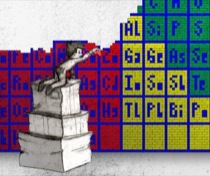
		<div style="float:right; padding:15px 5px 5px 5px"><img src="http://culture-making.com/media/OMMLegoWideARTICLE_210.jpg" alt="image"></div><p>Science is fueled by passion, a passion that is often attached to the world of objects much as the artist is attached to his paints, the poet to her words. From my first days at the Massachusetts Institute of Technology in 1976, I saw this passion for objects everywhere. My students and colleagues told how they were drawn into science by the physics of sand castles, by playing with soap bubbles, by the mesmerizing power of a crystal radio.</p><p>Since this was the early days of computer culture, there was also talk of new objects. Some people identified with their computers, experiencing these machines as extensions of themselves. For them, computers were useful for thinking about larger questions, questions of determinism and free will, of mind and mechanism ...</p><p>Objects don’t nudge every child toward science, but for some, a rich object world is the best way to give science a chance. Given the opportunity, children will make intimate connections, connections they must construct on their own ...</p><p>If we attend to young scientists’ romance with objects, we are encouraged to make children comfortable with the idea that falling in love with things is part of what we expect of them. We are encouraged to introduce the periodic table as poetry and LEGOs as a form of art.</p><hr />
<div class="author" style="font-size: -1">from "<a href="http://www.seedmagazine.com/news/2009/01/sherry_turkle_on_the_romance_o.php">The Romance of Objects</a>," by Sherry Turkle, <a href="http://www.seedmagazine.com/news/2009/01/sherry_turkle_on_the_romance_o.php"><i>Seed</i></a>, 9 January 2009</div>		


      ]]></content>
    </entry>

    <entry>
      <title>Growing up in Haiti, by Alice Smeets</title>
      <link rel="alternate" type="text/html" href="http://www.culture-making.com/post/growing_up_in_haiti_by_alice_smeets/" />
      <id>tag:culture-making.com,2012:author/9.1203</id>
      <published>2012-02-08T14:29:34Z</published>
      <updated>2012-02-08T19:38:35Z</updated>
      <author>
            <name>Nate Barksdale</name>
            <email>natebarksdale@gmail.com</email>
                  </author>

      <content type="html"><![CDATA[


					<b>Nate: </b><em>“This photograph was named Unicef's Photo of the Year for 2008. A friend of mine currently working as a journalist in Haiti posted the link and a very apt description: "Some of these photos of children in Haiti, by 21-year-old Belgian Alice Smeets, are wry. Most are wrenching. All are amazing." I second that.”</em><br />		
		<a href="http://www.alicesmeets.com/gal_haiti.htm"><img src="http://culture-making.com/media/slideshow001.jpg" alt="photo" /></a><hr />
<div class="author" style="font-size: -1">from "<a href="http://www.alicesmeets.com/gal_haiti.htm">Growing Up in Haiti</a>," a photo essay by <a href="http://www.alicesmeets.com/index.html">Alice Smeets</a> :: thanks Pooja!</div>		


      ]]></content>
    </entry>


</feed>