Posts tagged animals
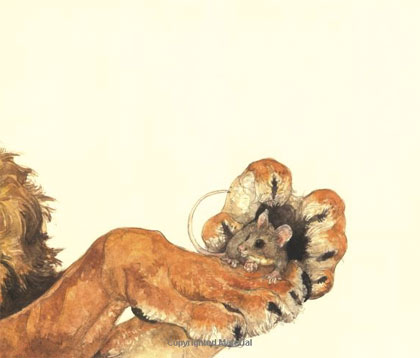
 The lion and the mouse


Frequently the [peacock] combines the lifting of his tail with the raising of his voice. He appears to receive through his feet some shock from the center of the earth, which travels upward through him and is released: Eee-ooo-ii! Eee-ooo-ii! To the melancholy this sound is melancholy and to the hysterical it is hysterical. To me it has always sound like a cheer for an invisible parade.
—Flannery O'Connor, "The King of the Birds"

Dan Wiesel and his wife, Alysa Binder, remember the guilt they felt after their Jack Russell terrier Zoe had to fly cross country in the cargo area of a plane when they moved from the San Francisco Bay area to Florida. “When she came out she just wasn’t herself,” Binder said. “We thought there had to be a better way.” The couple’s answer is Pet Airways, a new airline just for cats and dogs that the couple founded. The airline had its inaugural flights Tuesday from several airports, including BWI Marshall Airport.
There are no human passengers aboard Pet Airways flights, just animals, which are called “pawsengers…”
The airline is sold out for its first two months, Binder said. Pet Airways serves Baltimore, New York, Chicago, Denver and Los Angeles, but Binder said the company hopes to expand to 25 cities in a couple of years. Ticket prices average $250, Binder said. Other airlines charge $75 to $275 for pets, with prices varying depending on where the pets ride. In May, Southwest began allowing people to bring small pets on board for $75.
One airline expert said there is a niche for people who want to take their pets on vacation and other travels. But it is unclear if this airline is the answer.
It may be complicated for passengers to plan their flights with their pet’s flights, said Robert Mann, president of airline consulting firm R.W. Mann & Co. Inc.
“It’s an interesting concept,” Mann said. “There is a need for it. The key question is if this particular concept really meets that need. Time will tell, as it usually does.”

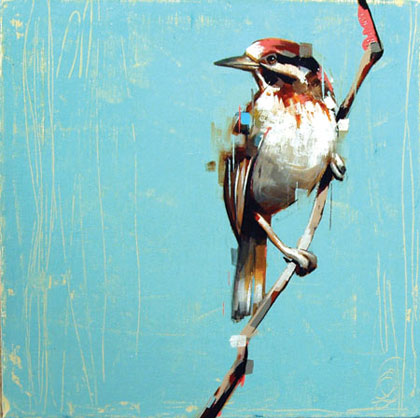 Fujimori Festival

Nate
:Nate
:
Tool use is rare in wild animals, but of widespread interest because of its relationship to animal cognition, social learning and culture. Despite such attention, quantifying the costs and benefits of tool use has been difficult, largely because if tool use occurs, all population members typically exhibit the behavior. In Shark Bay, Australia, only a subset of the bottlenose dolphin population uses marine sponges as tools, providing an opportunity to assess both proximate and ultimate costs and benefits and document patterns of transmission. We compared sponge-carrying (sponger) females to non-sponge-carrying (non-sponger) females and show that spongers were more solitary, spent more time in deep water channel habitats, dived for longer durations, and devoted more time to foraging than non-spongers; and, even with these potential proximate costs, calving success of sponger females was not significantly different from non-spongers. We also show a clear female-bias in the ontogeny of sponging. With a solitary lifestyle, specialization, and high foraging demands, spongers used tools more than any non-human animal. We suggest that the ecological, social, and developmental mechanisms involved likely (1) help explain the high intrapopulation variation in female behaviour, (2) indicate tradeoffs (e.g., time allocation) between ecological and social factors and, (3) constrain the spread of this innovation to primarily vertical transmission.
AsLOLn

Nate
: LOLCat-tharsis
Nate
:
Internet | The meaning of LOLcats, explained by a Psychology Today editor: “Just as the dogs in the New Yorker cartoons don’t represent actual dogs, these cats don’t represent cats at all, but people. By using cats, icanhascheezburger can access themes more tragic and poignant than it could using people.” [Salon]
 Chicken à la Queens
Nate
:
“This is the same chicken we have on the island,” Ms. Pierre said. “When my mother would make the chicken for dinner, I was right there at her feet helping her. Everything I learned to cook, I learned from her in Haiti.” To her surprise, she has found a taste of home and the perfect chicken at the Halal Live Meat and Poultry Market, a short bus ride from her house.
Muhammad Ali, the 41-year-old Bangladeshi owner of the market, is happy that Ms. Pierre is happy, even if it was never his intention to provide the ingredients for a homey Haitian dish. When he opened Halal Live two years ago, after deciding to forgo a doctorate in international politics, his only goal was to provide the mainly Pakistani Muslim community in the area with meat slaughtered under the traditions set forth in the Koran. Drawn to this bustling corner of Archer Avenue and 168th Street because of the pedestrian traffic — three buses stop outside his door — he had no idea that he would end up with such a polyglot clientele.
“I would say 50 percent of our business comes from people I never expected to come here,” said Mr. Ali, a shy, small-framed man, talking over the squawks of poultry and the chatter of customers. Among those who are keeping business booming are a Nigerian exchange student heading home from biology class at York College, a Salvadoran mango vendor who stops there after working the sidewalks of Jamaica Avenue, and Orthodox Jews who come accompanied by a shochet, a person trained to slaughter animals according to kosher ritual.

Nate
:Nate
:
In a ritual repeated nearly every weekend for the past decade here in Colombia’s war-weary Caribbean hinterland, Luis Soriano gathered his two donkeys, Alfa and Beto, in front of his home on a recent Saturday afternoon. Sweating already under the unforgiving sun, he strapped pouches with the word “Biblioburro” painted in blue letters to the donkeys’ backs and loaded them with an eclectic cargo of books destined for people living in the small villages beyond. His choices included “Anaconda,” the animal fable by the Uruguayan writer Horacio Quiroga that evokes Kipling’s “Jungle Book”; some Time-Life picture books (on Scandinavia, Japan and the Antilles); and the Dictionary of the Royal Academy of the Spanish Language.
“I started out with 70 books, and now I have a collection of more than 4,800,” said Mr. Soriano, 36, a primary school teacher who lives in a small house here with his wife and three children, with books piled to the ceilings. “This began as a necessity; then it became an obligation; and after that a custom,” he explained, squinting at the hills undulating into the horizon. “Now,” he said, “it is an institution.”
A whimsical riff on the bookmobile, Mr. Soriano’s Biblioburro is a small institution: one man and two donkeys. He created it out of the simple belief that the act of taking books to people who do not have them can somehow improve this impoverished region, and perhaps Colombia.
Gilgamesh for apes
Nate
:There’s been increased interest lately in monkey languages after discoveries were made about how putty-nosed monkeys combine sounds to create a basic syntax:
* Hack-hack-hack-hack: “There’s an eagle over there!” * Pyow-hack-hack-pyow-pyow-pyow: “I’ve seen a leopard, let’s move away!” * Hack-hack-hack-pyow-hack-hack-hack-hack-hack “There’s an eagle over there, let’s move away!”
But research at the Great Ape Trust using the sign language Yerkish reveals the primates are capable of far more linguistic sophistication. Primate Poetics sets out a manifesto to enrich this new language, starting, ambitiously, with a translation of the epic Gilgamesh:
“We will learn Yerkish. We will translate human literature into Yerkish. We will invent words, word-tricks, word-jokes, word-games to show the apes new ways of using (their) language. We will become knowledgeable and original enough to be invited by the researchers of the Great Ape Trust to read our Yerkish translation of Gilgamesh to Kanzi, Panbanisha and all the others.
“We are not here to compare and to compete with the ape but to appreciate its language for its own beauty. This is emphatically not about some lone genius monkey penning the Great Primate Novel.”

Nate
: Nepal Horse Book

Nate
:Nate
:
Bzzzpeek is an engaging little website that’ll play you clips of kids from various different countries making the sounds they think dogs, lions, and other common animals make. There seems to be very little disagreement across cultures about what cats say. Frogs, however, are another story entirely. And fair enough: the American “ribbit” is a pretty strange set of syllables to assign to frog noises. See bzzzpeek here. Via VSL.
Wooden whales

Nate
:The encyclopedia of life
Andy
:Far from being an ancient myth with no contemporary relevance, the story of Adam’s task has inspired and shaped human endeavor throughout the centuries. Modern science got its start in the golden age of exploration, when collectors began cataloging exotic plants and animals in the hope of restoring Adam’s complete knowledge of the world. Some sixteenth-century scholars, like Benito Montano (1527–1598), gave Hebrew names to the places Columbus discovered, because they assumed that the Bible must contain all the words we need to understand the New World. Others realized that there were more things to know and to be named than they ever imagined. Francis Bacon exhorted gentlemen of means to build gardens “with rooms to stable in all rare beasts and to cage in all rare birds . . . so you may have in small compass a model of the universal nature made private.” Adam’s sin, Christians believed, not only expelled the first couple from the Garden. Plants and animals too had been dispersed, but now scholars could imagine a return to paradise by achieving universal knowledge.
If God were to bring all the animals before man today, the line would be too long. This scene could only take place on the computer, which is exactly what the new Encyclopedia of Life proposes. This remarkable project aims to gather descriptions of every species known to science on a single website. Harvard biologist Edward O. Wilson has been the driving force behind the Encyclopedia, and his enthusiasm for it is unbounded. “It’s going to have everything known on it,” he said, “and everything new is going to be added as we go along.” Nearly two million species are known, but scientists estimate that ten times that many are yet to be discovered. Most of these unknown species are bacteria, fungi, and insects. We can name them because we know, or want to know, everything about them.